
Is Intel the Comeback Stock of the Decade?

A Deep-Dive Analytical Report on the Most Dramatic Resurrection in Semiconductor History
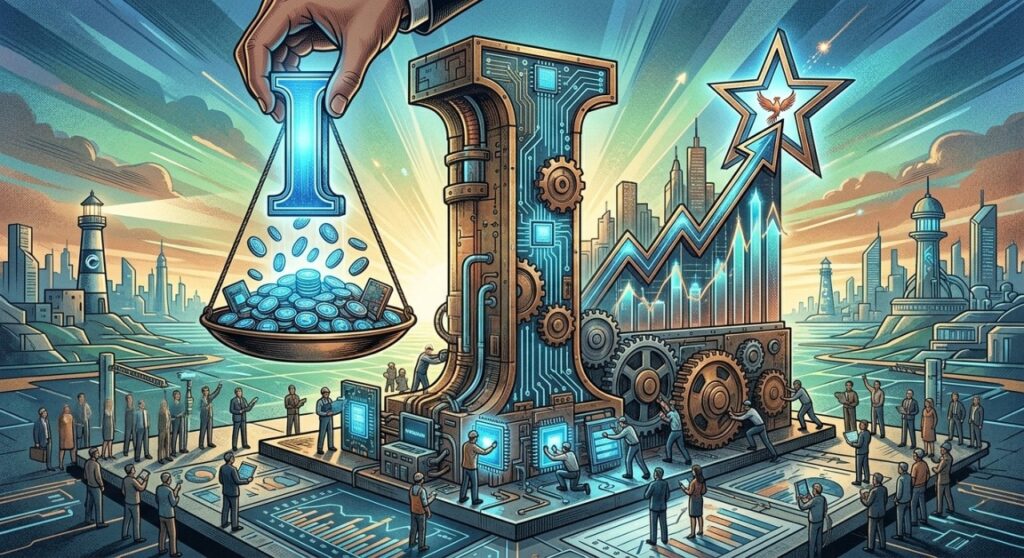
There is a particular kind of silence that falls over a stock when the market has given up on it. Not the silence of neglect, exactly, but something more final — the silence of collective resignation, of portfolio managers quietly moving the ticker to the “not worth the conversation” pile, of analysts downgrading their targets with the weary detachment of someone filing paperwork on a closed case. That was Intel in the second half of 2024 and most of 2025. A company that had once been the unquestioned sovereign of Silicon Valley, the firm that put the “Intel Inside” sticker on the dream of personal computing for an entire generation, was trading below $19 per share. Its market capitalization had been reduced to a fraction of the value it once commanded. And the Wall Street consensus — including a standing Underperform rating from Bank of America, the same firm that would later reverse that call with rare and emphatic conviction — was that the story was essentially over.
Then something happened that the market had long stopped expecting from Intel. The company started to execute.
Fast forward to the week of June 11, 2026, and the narrative has been rewritten in a way that feels, even to seasoned technology investors who have lived through multiple boom-and-bust cycles in semiconductors, genuinely surprising. Intel shares are trading near $125 as of this writing — a recovery of more than 550% from those sub-$19 lows. Bank of America’s Vivek Arya, one of the most closely followed semiconductor analysts on the Street, executed a rare “double upgrade” on June 11, leaping two rating rungs in a single move from Underperform to Buy and raising his price target from $96 to $135. The iShares Semiconductor ETF surged more than 8% in a single session on the day of the upgrade. And the question that is now being asked in every technology-focused investment office from San Francisco to Singapore is the same one that would have sounded almost delusional eighteen months ago: Is Intel actually back?
The honest, nuanced answer — the kind that lives in the space between hype and cynicism, which is where good analysis has to live — is that Intel is neither fully back nor still broken. It is something more interesting and more complicated than either of those things: a company in genuine mid-transformation, with real operational progress, real structural tailwinds, and real execution risks, all of which are now compressed into a stock that has already priced in a great deal of the good news and is now asking the market to believe that the best is still ahead.
The question worth asking is not “has Intel recovered?” — the price chart answers that. The question worth asking is “what does Intel look like in 2030, and is the current valuation a fair price for that outcome?” The answer to that question is the subject of everything that follows.
The Fall: How the Mightiest Chip Maker in the World Became a Cautionary Tale
To understand where Intel is going, you have to understand where it has been — and not just in the abstract sense of knowing the headlines, but in the deeper structural sense of understanding why a company that was once the most dominant force in its industry managed to stumble so badly for so long.
Intel’s period of sustained dominance ran, roughly, from the mid-1990s through the early 2010s. During that era, the company combined the two capabilities that define competitive supremacy in semiconductors: it designed the best chips, and it manufactured them on the most advanced process nodes in the world. The “x86 architecture” that Intel had helped develop and then continuously refined became the de facto standard for personal computers and, eventually, data center servers. The manufacturing advantage that Intel maintained over its rivals meant that its chips were consistently faster and more power-efficient than what anyone else could produce. For nearly two decades, Intel was not just a dominant company — it was functionally a monopoly on the most important silicon in the world.
The unraveling began gradually and then all at once.
The first thread to pull was mobile. When Apple decided in 2010 to build the iPhone on ARM-based chips rather than x86 architecture, the company was making a technical judgment — ARM designs were more power-efficient, better suited to battery-powered devices — but it was also making a bet that would reshape the entire semiconductor industry. Intel, convinced that mobile was a market it would eventually capture with its own designs, declined an early opportunity to supply chips for the original iPhone. It was a decision that Intel’s former CEO Paul Otellini later called his biggest regret. The company never captured the mobile market, and mobile turned out to matter more than anyone — including Apple — fully anticipated at the time.
The second thread was manufacturing. Intel’s process technology advantage — what engineers call being “ahead on the node” — began eroding in the late 2010s when TSMC and Samsung proved capable of matching and then surpassing Intel’s manufacturing capabilities. The shift was symbolized most acutely by the repeated, embarrassing delays in Intel’s 10nm and 7nm production nodes. While TSMC was shipping 7nm chips to Apple, AMD, and others, Intel was stuck at 14nm — a node it had shipped five different variants of while competitors lapped it. AMD, which had rebuilt itself around a “fabless” model of designing chips and having TSMC manufacture them, was able to offer server processors that were genuinely more competitive than Intel’s offerings for the first time in a generation. The data center market, which had been Intel’s most profitable and seemingly impenetrable stronghold, began to crack.
The third thread — the most damaging — was the compounding effect of these two failures on Intel’s culture and organizational effectiveness. A company that had operated as a monopoly for so long had developed, as monopolies often do, a certain insularity about its own judgment. When the market began to signal that the old ways were not working, the response was slow, internally contested, and often contradictory. Successive leadership changes — from Brian Krzanich to Bob Swan to Pat Gelsinger, who returned to the company with enormous fanfare in February 2021 — brought successive rounds of strategic pivots, each promising to be the decisive corrective turn. Gelsinger’s “IDM 2.0” strategy — committing Intel to both designing its own chips and manufacturing chips for external customers as a foundry — was genuinely ambitious, but the execution proved far more difficult and expensive than management had projected.
By the time Gelsinger departed in December 2024, Intel had burned through enormous capital on new fabrication facilities in Arizona and elsewhere, posted billions in operating losses from its foundry division, seen its share price collapse, and — perhaps most damagingly — had still not demonstrated that its manufacturing technology could reliably compete with TSMC at the leading edge. The market, by late 2024, had essentially priced in the conclusion that Intel would permanently cede its manufacturing leadership and become, at best, a respectable but second-tier chip designer — the kind of company that competes on legacy x86 relationships rather than on silicon leadership.
That was the bottom. And from the bottom, the only question was whether the company would drift sideways forever or find some reason to rise.
Enter Lip-Bu Tan: The Turnaround Architect
The man now responsible for proving that assessment wrong is Lip-Bu Tan, who took over as Intel’s CEO in early 2025 after a career that included running Cadence Design Systems from 2009 to 2021 — where he turned that company into one of the most valuable electronic design automation businesses in the world — and founding Walden International, one of the pioneering venture capital firms focused on the semiconductor industry.
Tan is, by background and temperament, precisely the opposite of the kind of CEO who generates headline-grabbing strategic pivots and sweeping narrative resets. He is an engineer and an operator. His vocabulary is that of execution, yield rates, design-to-manufacturing integration, and cost structure. And the changes he has made since taking over have been less about repositioning the brand than about the harder, less glamorous work of actually fixing the manufacturing, the culture, and the cost base.
The most immediate visible changes were in headcount and organizational structure. Tan reduced Intel’s workforce substantially — the company went from approximately 110,000 employees at the height of the Gelsinger era to 85,100 as of the 2025 annual report — and, perhaps more importantly, reduced the number of management layers in the organization. The goal was not simply to cut costs, though that mattered enormously for a company burning through cash; it was to shorten the feedback loops between the engineers closest to the manufacturing challenges and the leadership team making decisions about how to address them. In a business where the relevant problems are often highly technical and where the devil is reliably in details that only practitioners understand, organizational flatness is not just an efficiency measure — it is a prerequisite for making good decisions fast.
<cite index=”157-1″>Key measures under Tan have included reducing management layers to speed up decision-making, introducing a four-day</cite> production rhythm and a renewed emphasis on what the company internally describes as “factory discipline” — the kind of meticulous process control that has historically been TSMC’s signature advantage and that Intel lost, to some degree, during the years of repeated node delays.
The tone Tan set in Intel’s first-quarter 2026 earnings call was, by design, deliberately un-dramatic. <cite index=”179-1″>New CEO Lip-Bu Tan has emphasized execution over grand promises. During the first-quarter earnings call he described 2026 as a year of steady delivery rather than explosive growth. That tone seems to have landed well with investors tired of missed targets.</cite> After years of CEOs promising transformational outcomes and delivering operational disappointments, the market responded to the frank modesty of “we are delivering steadily” with something approaching relief.
And the delivery, in Q1 2026, was genuinely impressive.
<cite index=”155-1″>In Q1 2026, Intel reported revenue of $13.6 billion, exceeding guidance by $1.4 billion, with a gross margin of 41% and earnings per share of $0.29.</cite> These are not the numbers of a company in terminal decline. They are the numbers of a company that has stopped the bleeding and begun, carefully, to grow. <cite index=”175-1″>In the first quarter of 2026, Intel’s data center and AI revenue rose 22% year over year to about $5.1 billion — easily the fastest-growing of its three main segments, well ahead of the 1% growth in its client computing group, which sells PC chips.</cite>
For the second quarter of 2026, <cite index=”157-1″>Intel expects revenue of $13.8 billion to $14.8 billion and non-GAAP earnings of $0.20 per share, above analyst expectations of $13.07 billion and $0.09, respectively. The strong guidance was the primary driver of the post-report share rally.</cite>
The financial narrative, in other words, has definitively turned. But the question of whether it continues to turn — and how far and how fast — depends on two structural bets that Intel is now pressing simultaneously, both of which have significant upside and significant risk.
The CPU Reasserts Itself: Why Agentic AI Changes Everything
The first of those structural bets is, on its surface, a counterintuitive one. In a technology landscape that has been defined for the past three years by the relentless rise of the GPU — Nvidia’s ascent from gaming chip maker to the provider of the most in-demand computing infrastructure on the planet has been one of the defining investment stories of the 2020s — Intel’s core product is the central processing unit, the CPU. And the conventional wisdom, firmly established by mid-2025, was that CPUs were becoming a commodity, squeezed between the GPUs that handle the heavy lifting of AI model training and the custom silicon (Google’s TPUs, Amazon’s Trainium chips, Microsoft’s Maia accelerators) that increasingly handles inference at scale.
What Bank of America’s Vivek Arya is arguing — and what Intel CEO Lip-Bu Tan himself articulated on the Q1 2026 earnings call — is that this conventional wisdom is wrong, and that the transition from generative AI to what the industry is calling “agentic AI” is the reason why.
<cite index=”175-1″>”In recent months, we have seen clear signs that the CPU is reasserting itself as the indispensable foundation of the AI era,” said Intel CEO Lip-Bu Tan in the company’s first-quarter earnings call.</cite>
The logic goes something like this. Generative AI — the technology that powers large language models and image generators — is primarily a training and large-batch inference workload. It is compute-intensive in a way that maps very well onto the parallel processing architecture of GPUs. But agentic AI — the emerging paradigm in which AI systems take sequences of actions, make multi-step decisions, interact with external tools and databases, and operate continuously in dynamic environments — requires a different kind of computing. It requires fast, flexible, single-threaded processing that can handle complex conditional logic, switch rapidly between tasks, and coordinate between different specialized components of an AI system. That is, historically and architecturally, what CPUs do well.
<cite index=”171-1″>Analyst Vivek Arya raised Bank of America’s 2030 estimate for the server-CPU market to more than $170 billion, up from $125 billion, arguing that “agentic AI” is “a powerful demand accelerant that expands the CPU opportunity and lifts both x86 incumbents and ARM challengers.”</cite>
A market that grows from $125 billion to $170 billion by 2030 is a market that has expanded by $45 billion in annual revenue in roughly four years. For Intel, which Bank of America projects to hold roughly a 25% share of that market, <cite index=”159-1″>the bank’s new model assumes Intel’s data center and AI business can reach $43.7 billion by 2030, helped by roughly a 25% share of a $170 billion server CPU market.</cite>
The AI PC opportunity adds another dimension to this story. <cite index=”160-1″>With the penetration of AI-capable PCs expected to rise from 19% in 2024 to over 53% by the end of 2026, Intel’s Client Computing Group is perfectly positioned to lead a massive hardware upgrade cycle.</cite> Every laptop and desktop that upgrades to an AI-capable configuration needs a new processor — and Intel, as the dominant supplier of PC processors for decades, is positioned to capture a meaningful share of that refresh cycle.
<cite index=”155-1″>AI-driven businesses now represent 60% of Intel’s total revenue and grew 40% year-over-year, per the company’s Q1 2026 Earnings Release filed with the SEC.</cite> Sixty percent. Less than two years ago, that figure was negligible. The transformation of Intel’s revenue mix toward AI-driven workloads is happening faster than most analysts had modeled, and it is one of the key reasons the stock has performed so dramatically in 2026.
The Foundry Gamble: Intel’s Most Expensive and Most Consequential Bet
The second structural bet — and the one that carries both the most potential upside and the most execution risk — is Intel’s foundry strategy.
The concept, at its core, is straightforward: Intel wants to be not just a chip designer but a chip manufacturer for other companies, competing directly with TSMC for the business of the world’s leading fabless semiconductor companies — Apple, Nvidia, AMD, Qualcomm, and the rest. Intel Foundry Services, rebranded and restructured under Tan, is the vehicle for that ambition.
The strategic rationale is compelling. TSMC has, through its dominance of advanced semiconductor manufacturing, created a critical chokepoint in the global technology supply chain. Virtually every advanced chip in the world — from the processors in your smartphone to the GPUs in Nvidia’s data center racks — is manufactured either by TSMC or, to a much lesser extent, by Samsung. That concentration of capability in a single geography and a single company has become an increasingly uncomfortable reality for large technology companies and for policymakers who have absorbed the lessons of what happens when global supply chains are interrupted.
Intel, with its fabrication facilities in the United States and Europe, represents the possibility of a second leading-edge semiconductor manufacturer with a different geographic footprint. <cite index=”163-1″>Intel advanced its Intel 18A (1.8nm-class) process, which entered high-volume manufacturing in late 2025 and is being positioned for both internal and external foundry customers.</cite> The 18A node is Intel’s most advanced manufacturing process, and it incorporates two genuinely novel engineering innovations: RibbonFET, a next-generation transistor architecture, and PowerVia, a backside power delivery network that delivers power to transistors from below the silicon rather than from above, significantly improving power efficiency and performance density.
<cite index=”173-1″>This positive sentiment was amplified by news of Google and Nvidia potentially using Intel as a backup chip manufacturer.</cite> That phrase — “as a backup chip manufacturer” — is worth unpacking, because it tells you a great deal about where the foundry business stands today. These are conversations, expressions of interest, due diligence processes — not signed, high-volume production contracts. But they are conversations that would not have been happening at all two years ago, when Intel’s manufacturing credibility had been damaged by years of delays and yield problems. The fact that Nvidia and Google are seriously evaluating Intel as a manufacturing partner is itself a form of market validation that the 18A process is real, that it works, and that it might genuinely compete with TSMC’s offerings.
The foundry revenue figures are still small in absolute terms. <cite index=”179-1″>External foundry revenue, though still small at $174 million in the quarter, begins to show traction.</cite> One hundred seventy-four million dollars in a quarter is a rounding error compared to TSMC’s quarterly revenues of tens of billions. But the trajectory matters more than the absolute number at this stage of development. External foundry revenue growing from essentially zero to $174 million per quarter in the space of two years is the beginning of a curve, not the full expression of one.
<cite index=”172-1″>BofA now sees Intel delivering earnings power of more than $6 per share by 2030, up from a prior estimate of $3 to $4. The bank applies a 25x multiple to its 2030 EPS power estimate of $6.24, discounted back two years, to arrive at its $135 price target.</cite>
The math that produces that $135 target requires Intel to execute on both the CPU market share story and the foundry ramp simultaneously, over a four-year horizon, in a competitive landscape that includes TSMC, Samsung, AMD, Nvidia, and a growing ecosystem of custom silicon that every major technology company is now developing internally. None of those assumptions is unreasonable. But none of them is certain, either.
The Competitive Landscape: Friends, Rivals, and the Architecture Underneath Everything
The competitive environment in which Intel is staging this recovery is simultaneously more favorable and more threatening than it was at any point in the past decade.
More favorable because the AI boom has dramatically expanded the total market for advanced computing. The overall semiconductor market is not a zero-sum game at this moment in history — it is growing fast enough that multiple players can gain simultaneously. Bank of America’s expansion of its server CPU market estimate from $125 billion to $170 billion by 2030 is not a forecast in which Intel takes share from TSMC’s customers; it is a forecast in which the market expands and Intel participates in that expansion.
More threatening because the same AI boom that is creating new opportunities for Intel is also funding and accelerating the development of alternatives to Intel’s products. Nvidia’s RTX Spark PC superchip, announced at Computex 2026, represents a direct foray into Intel’s traditional PC CPU territory. <cite index=”155-1″>Nvidia’s unveiling of the RTX Spark PC superchip at Computex 2026 introduced direct new competitive risk to Intel’s core business, sending INTC shares roughly 5% lower on the day of the announcement.</cite> Nvidia entering the PC processor market — leveraging its GPU architecture and its AI software ecosystem to offer a different kind of PC processing experience — is the kind of competitive development that Intel cannot afford to dismiss.
ARM-based architectures continue to gain ground in the server market, where chips built on ARM designs by Amazon (Graviton), Microsoft (Cobalt), and others are taking meaningful share from x86 incumbents. Arya’s call that “agentic AI” will drive CPU expansion is explicitly not a prediction that x86 wins all of that expansion — it is a call that the overall market grows, and that both x86 (Intel and AMD) and ARM-based designs benefit. That nuance matters: Intel does not need to maintain its historical market share to prosper in this environment, but it does need to remain a preferred option for workloads where the x86 ecosystem — and the decades of software optimization built around it — provides a meaningful advantage.
And then there is AMD, which has used its fabless model to become a genuinely formidable competitor in both client computing and the data center. AMD’s server CPU share gains of the past five years represent a permanent recalibration of the competitive landscape — Intel will not simply recover its 90%+ market share in server processors. The question is whether Intel can stabilize around a 70-75% share at which it remains the dominant player in a growing market, or whether AMD and ARM-based alternatives continue to erode its position further.
The Computex 2026 conference, where Intel CEO Lip-Bu Tan gave a keynote presentation against a backdrop featuring an image of Taiwan — a pointed visual statement about manufacturing geography and supply chain resilience — encapsulates the competitive narrative perfectly. <cite index=”159-1″>Lip-Bu Tan, chief executive officer of Intel Corp., speaks in front of an image of the island of Taiwan during Computex 2026 in Taipei, Taiwan, on Tuesday, June 2, 2026.</cite> The message was clear and was clearly received by the technology industry’s assembled decisionmakers: Intel is offering an alternative to complete dependence on a single island’s manufacturing capacity. It is a message that resonates differently in a period when the global technology industry has absorbed hard lessons about supply chain concentration.
What Wall Street Actually Thinks: A Survey of the Analyst Landscape
The Bank of America double upgrade has dominated the conversation about Intel in investment circles this week, but it is worth placing it in the broader context of where analyst opinion actually sits — because the picture is considerably more complex and more divided than a single dramatic upgrade might suggest.
<cite index=”155-1″>The S&P Global Market Intelligence consensus across 48 analysts sits at $88.71 average target with a “Hold” rating — but Mizuho ($128), Wells Fargo ($110), and Barclays ($100) all raised their INTC targets on June 2, 2026.</cite> The consensus target of $88.71 sits materially below the current trading price of approximately $125 — which means that, in aggregate, Wall Street still thinks the stock has gotten ahead of itself. That is a significant data point. When a stock is trading above the consensus analyst target, it means the market has already priced in more optimism than the median analyst thinks is warranted.
<cite index=”158-1″>According to 31 analysts, Intel has a Hold consensus rating as of June 17, 2026. Wall Street analysts have set a price target of $77.16.</cite> Some surveys put the consensus target even lower than the $88.71 S&P Global figure — reflecting the fact that several analysts covering the stock still carry price targets that imply significant downside from current levels.
The bull-bear spectrum, as of today, runs from approximately $44 (the bear case, which assumes Intel’s foundry strategy fails to gain traction and competitive pressure from AMD, ARM, and Nvidia accelerates the erosion of its core CPU businesses) to $135 (Bank of America’s new target) to the occasional more aggressive price target from analysts who believe the foundry optionality is being undervalued.
<cite index=”160-1″>The Bull Case ($118.66 Target): If Intel successfully executes its 14A process and secures a second “anchor” customer on the level of Microsoft, analysts see a path to $118.66.</cite> Bank of America’s $135 target goes further, but essentially requires a similar scenario — successful 18A ramp, meaningful external foundry revenue growth, and sustained CPU market share in an expanding server market.
The bear case is not implausible. Intel has promised manufacturing recovery before and delivered disappointment. The 18A process, while promising, needs to achieve commercial-scale yields consistently before it can be relied upon as a real competitive weapon against TSMC. External foundry customers are cautious by nature — they will not commit high-volume production to a new manufacturing partner until they have seen sustained proof of yield reliability over time. And the cultural transformation that Tan is attempting is real, but cultural transformations at large, established corporations are slow and vulnerable to reversal.
<cite index=”171-1″>Intel has more than tripled in value since the start of the year, so a great deal of the turnaround story is already priced in, and double upgrades sometimes land closer to a sentiment peak than to the start of one. The foundry projection in particular assumes years of near-flawless execution against TSMC, an area where Intel has repeatedly stumbled.</cite>
That sentence — “double upgrades sometimes land closer to a sentiment peak than to the start of one” — is perhaps the most important caution in the entire analysis. It is not a prediction that Intel will fall, but it is a reminder that the history of dramatic analyst upgrades following large stock price recoveries is not uniformly positive for subsequent returns. The question is not whether Intel’s story is compelling — it clearly is. The question is whether that compelling story is now more than fully reflected in the price.
The Longer View: What Does Intel Look Like in 2030?
Setting aside the near-term question of whether the stock is cheap or expensive at $125, the more interesting and analytically richer question is what Intel actually looks like as a business in 2030 — and whether that business is structurally different from the Intel of 2024.
<cite index=”159-1″>Bank of America’s new model assumes Intel’s products’ revenue can climb from $55 billion in 2026 to $86.1 billion by 2030.</cite> That is compound annual growth of roughly 11-12% over four years, in a market that Bank of America believes will expand from roughly $125 billion in server CPUs alone to $170 billion. For a company with Intel’s existing customer relationships, manufacturing capacity, and software ecosystem, capturing that growth is achievable — but it requires continued flawless execution on the manufacturing roadmap, no major setbacks in the foundry ramp, and sustained competitive positioning against AMD and ARM-based alternatives.
The foundry business, if it executes, could be transformationally valuable. A mature Intel foundry business serving major external customers at scale would fundamentally change how the market values the company — moving it from a “CPU company” (which the market evaluates on earnings multiples) to a “semiconductor ecosystem platform” (which could command higher multiples reflecting the scarcity value of leading-edge manufacturing capacity located outside of East Asia). That re-rating possibility is part of what makes the bull case as compelling as it is.
<cite index=”160-1″>Under CEO Lip-Bu Tan’s leadership, the company is executing its aggressive “five-nodes-in-four-years” roadmap to regain process leadership from TSMC and establish Intel as a world-class foundry.</cite> Five nodes in four years is an enormously ambitious manufacturing roadmap. Intel 18A is the current leading node, with the 14A process — which would represent another significant step in transistor density and performance — expected to follow. Successfully executing five process node transitions in four years would require a level of manufacturing discipline and engineering execution that Intel has not consistently demonstrated in recent years.
But — and this is the crucial “but” — Intel has demonstrated in Q1 2026 that it can surprise to the upside on the financial metrics that matter most to investors. <cite index=”155-1″>Intel surged more than 466% over the past 12 months, climbing from a 52-week low near $19 to trade around $109 as of June 2, 2026</cite>, and has continued moving higher since. That kind of price performance, over that kind of timeframe, is historically associated with either a genuine business renaissance or a sentiment bubble — and the distinguishing factor, always, is whether the earnings growth that was promised actually materializes.
The Q1 2026 data suggests the former. Revenue of $13.6 billion beating expectations by $1.4 billion — that is not a marginal beat; it is a substantial one. Data center and AI revenue growing 22% year-over-year, in a segment that is now Intel’s fastest-growing, is genuinely encouraging. And management’s decision to provide Q2 guidance well above analyst expectations — projecting $13.8 to $14.8 billion in revenue against consensus of $13.07 billion — suggests confidence rather than sandbagging.
<cite index=”179-1″>Intel posted first-quarter 2026 revenue of $13.6 billion, up 7% from a year earlier. Data center and AI sales jumped 22%. Intel Foundry revenue climbed 16% to $5.4 billion even as the company reported a $3.7 billion net loss driven by restructuring charges.</cite>
The net loss figure — $3.7 billion, driven by restructuring charges — is the last visible scar of the repair work Tan has been doing on Intel’s cost structure and organizational design. Restructuring charges are, by accounting convention, treated as non-recurring items, but in Intel’s case they reflect real cash spent on the painful process of right-sizing a company that had grown bloated during years of dominance and had not yet adjusted to a more competitive landscape. The GAAP loss masks what is, on a non-GAAP basis, a business that is now generating positive earnings and growing them.
The Synthesis: What the Numbers Tell Us and What They Don’t
The Intel story in June 2026 is, at its core, a story about the tension between three things that are all simultaneously true.
The first truth is that Intel’s operational recovery is real. The Q1 2026 results are not accounting magic — they represent genuine revenue growth, genuine margin improvement, and genuine progress in the company’s highest-potential segments. Lip-Bu Tan has changed the culture, reduced the cost base, tightened the manufacturing processes, and begun to rebuild the credibility that Intel’s management had lost through years of overpromising and underdelivering.
The second truth is that the stock price has already reflected an enormous amount of that progress. A 466%+ gain in twelve months prices in not just the current recovery but a substantial portion of the future recovery. The consensus analyst target of $88.71 is below the current market price, which tells you that the median analyst thinks the stock is, at minimum, fairly valued and possibly stretched. The bulls — Bank of America at $135, Mizuho at $128, Wells Fargo at $110 — are projecting continued appreciation, but they require Intel to execute flawlessly on its foundry strategy and maintain CPU market share in a more competitive environment than has existed at any point in the company’s modern history.
The third truth is that the long-term structural case for Intel is genuinely compelling in a way it has not been for years. The expansion of the server CPU market driven by agentic AI, the AI PC upgrade supercycle, and the foundry opportunity created by the global technology industry’s recognition of its over-dependence on TSMC — these are real, durable trends with multi-year tailwinds. Intel, uniquely among major semiconductor companies, has the ability to participate meaningfully in all three simultaneously.
<cite index=”171-1″>The thesis is genuinely compelling, but the bar Intel now has to clear to justify a $135 stock is considerably higher than it was at $96. This article is not investment advice.</cite>
That last sentence — “this article is not investment advice” — is worth echoing in the strongest possible terms. Intel at $125 is a fundamentally different investment proposition from Intel at $19. The downside risk is real, the competitive risks are real, and the execution risks on the foundry roadmap are real. For investors who bought at $19 and are now sitting on extraordinary gains, the question of whether to hold is different from the question facing an investor considering a new position today. The margin of safety is thinner. The room for disappointment is larger.
But for investors with a multi-year horizon and a tolerance for volatility, the Intel story in June 2026 offers something rare: a formerly dominant company that has genuinely reformed itself, with credible leadership, real operational progress, and access to structural market opportunities that could sustain growth well beyond the current recovery.
Whether Intel is the comeback stock of the decade depends, ultimately, on what “comeback” means. If it means recovering from near-oblivion to double-digit growth and strategic relevance — it already is. If it means returning to the unquestioned supremacy it enjoyed in 1995 or 2005 — that is a different and considerably longer journey, and the outcome is far from guaranteed.
The most honest answer is probably this: Intel is a comeback story that is real, that has further to run, and that will test the conviction of its investors every quarter for the next several years. The phoenix has risen from the ashes. Whether it has fully spread its wings, or whether the most dramatic part of the flight is still ahead — that is a question that silicon and software and the marketplace will answer over the next four years.
For now, on the morning of June 17, 2026, the stock is at $125, the upgrades are piling in, and a company that many had written off for dead is asking the world to believe in it again.
Remarkably, the world is starting to listen.
Closing Context: The Broader Semiconductor Landscape
Intel’s story does not exist in isolation. It is embedded in a broader transformation of the semiconductor industry that is reshaping the global technology landscape in real time.
The McKinsey projection that global demand for AI-ready data center capacity would grow at approximately 33% annually through 2030, with AI workloads consuming roughly 70% of total data center capacity by the decade’s end, is the macro backdrop against which every investment in semiconductors must be evaluated. In a world where computing demand is growing at that rate, the constraint is not customer demand — it is the physical capacity to manufacture the chips that will satisfy that demand.
TSMC is expanding aggressively, including its Arizona “gigafab” complex which, at completion, will include six fabrication plants, two advanced packaging facilities, and a research center. But even TSMC’s expansion has limits, and the global technology industry has learned the lesson that concentration of critical manufacturing in a single geography creates vulnerabilities that no amount of supply chain optimization can fully address.
Intel’s foundry strategy, whatever its near-term execution challenges, addresses a structural market need that is real and growing. The question is not whether the world needs a second source of leading-edge semiconductor manufacturing located outside East Asia. It clearly does. The question is whether Intel can be that source — whether the engineering talent, the manufacturing infrastructure, the process technology, and the organizational culture that Lip-Bu Tan is building can deliver on that need reliably enough, at competitive cost, to attract and retain the external customers whose business is necessary to make the foundry economically viable.
The answer to that question will determine not just Intel’s stock price over the next four years, but a meaningful part of how the global technology industry is structured in the decade ahead.
That is the weight of what Intel is attempting. And that, perhaps, is the most compelling thing about the Intel story in 2026: it is not just about one company’s recovery. It is about what that recovery means for the entire architecture of the global economy’s most critical industry.
This analytical report has been prepared by drawing on publicly available research from Bank of America Securities, S&P Global Market Intelligence, RoboForex, TradingKey, Motley Fool, TheStreet, Investing.com, Yahoo Finance, WebProNews, InteractiveCrypto, TechTimes, and other sources as of June 17, 2026. All data, financial figures, analyst targets, and market projections cited are sourced from these publicly available materials and attributed to their originating analysts and institutions.
This article is intended solely as journalistic analysis and market commentary for informational and educational purposes. Nothing contained in this report constitutes investment advice, financial guidance, a solicitation to buy or sell any security, or a recommendation of any particular investment strategy. All forward-looking statements and analyst price targets cited herein represent the opinions of the analysts and institutions named, not the views of the author or publication.
Investing in individual stocks, including INTC, involves substantial risk of loss. Past performance, including the 466%+ gain cited in this report, is not indicative of future results. Intel Corporation’s ability to execute its manufacturing roadmap, foundry strategy, and competitive positioning in AI-era computing markets involves significant uncertainties that may cause actual results to differ materially from analyst projections. Readers should conduct their own research and consult with a licensed financial professional before making any investment decisions.
All persons mentioned are referenced in their public professional capacities. Financial figures reflect reported and projected data available at time of writing and are subject to revision.